By Molly Blackwell
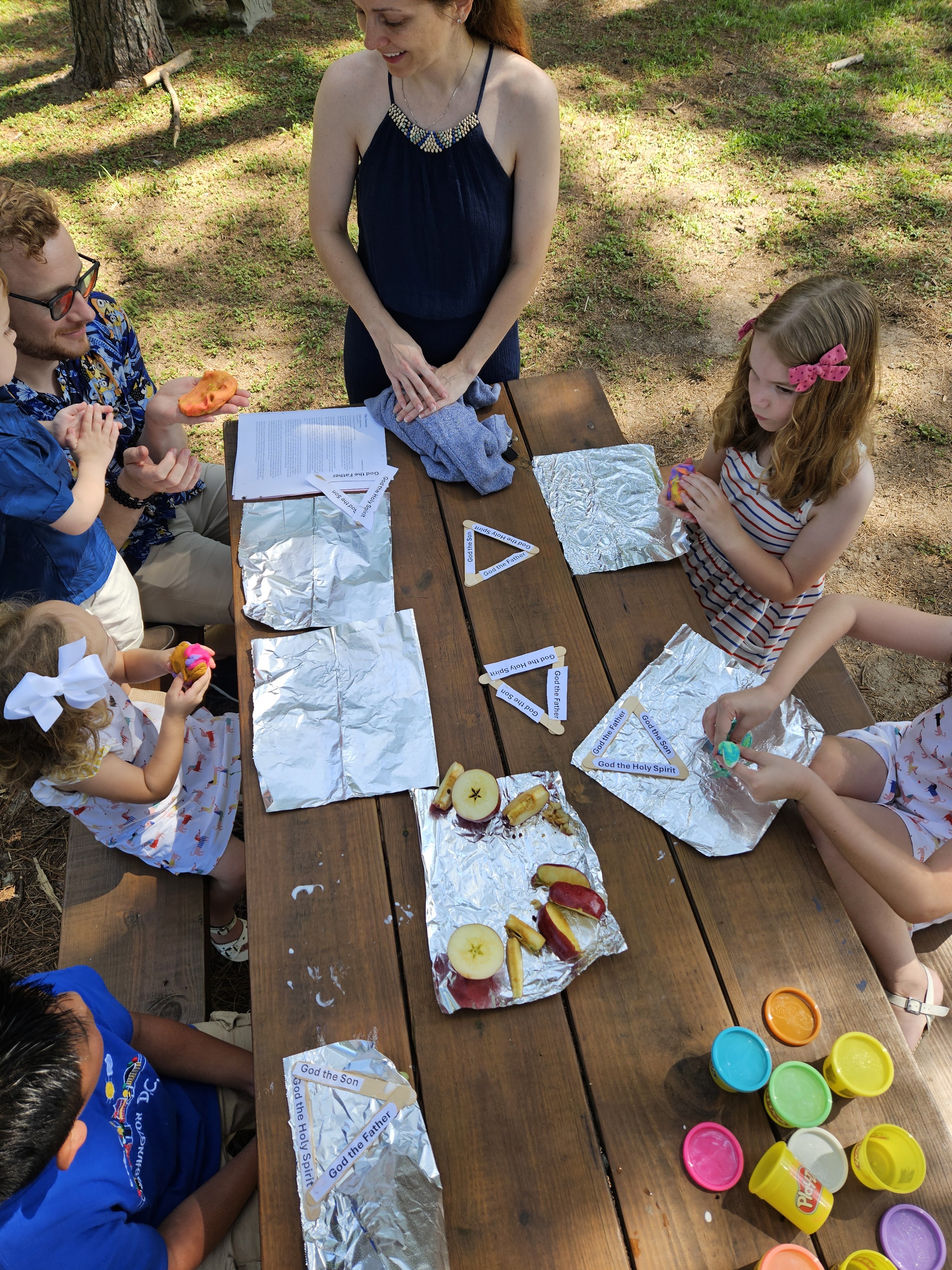
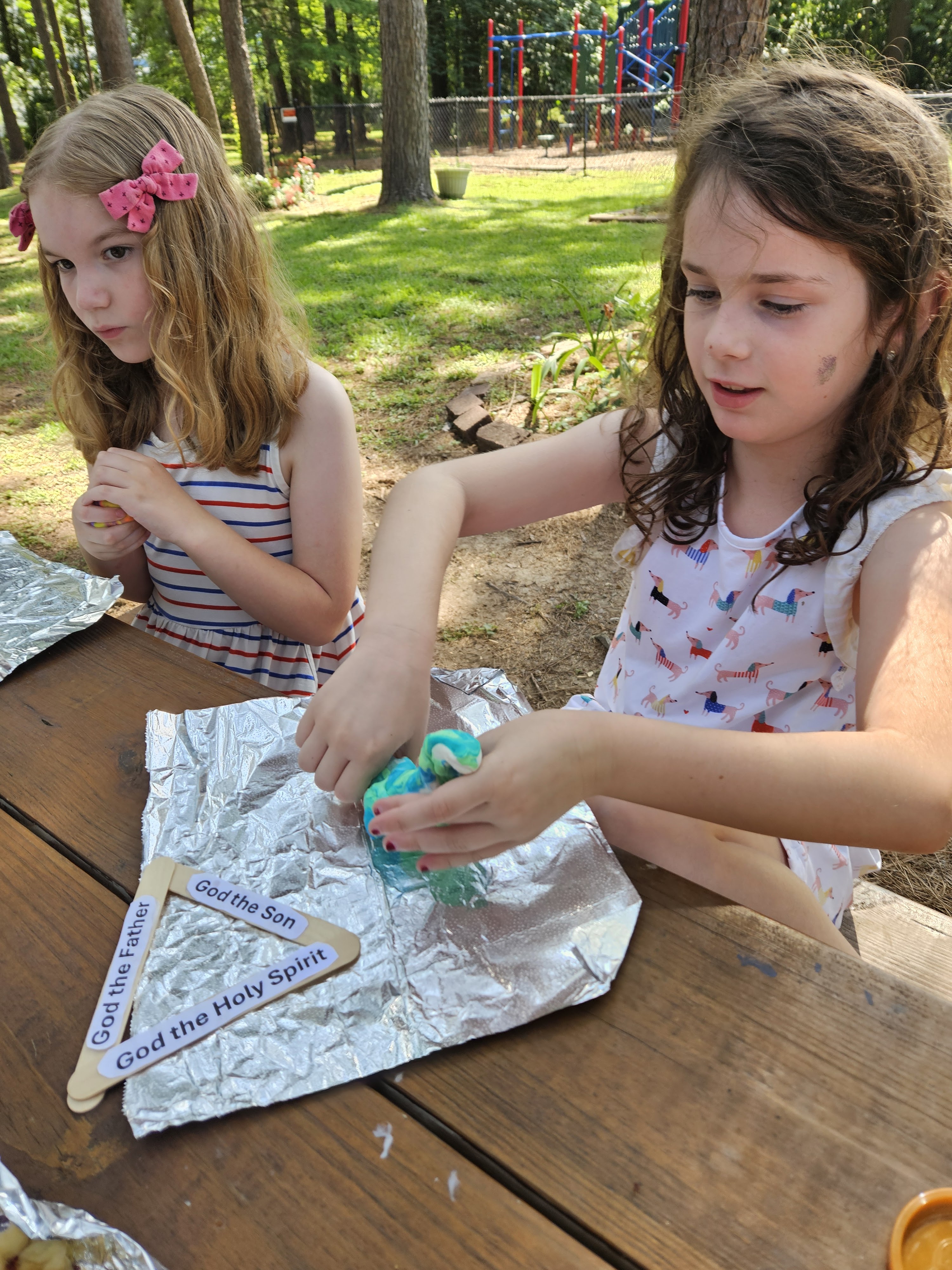
In our recent Creation Care Sunday School class at St. Margaret’s, we celebrated Trinity Sunday by discussing how God the Father, Son, and Holy Spirit work together as a team to create and sustain the world. We learned that God the Father designed the sky, the soil and every creature. We learned that Jesus fills the world with life, light and love and the Holy Spirit is like a gentle breeze that guides us to want to keep the earth clean and beautiful. The students learned that caring for the environment is a way to participate in God’s “sacred dance.” We concluded that even small acts of conservation are powerful ways to show our love for God.
The theology of creation care is fundamentally rooted in the nature of the Trinity. Christian theology teaches that the universe is the overflow of a perfect, loving relationship between the Father, Son, and Holy Spirit. Because the Triune God created the world together, our responsibility to care for the earth is inherently tied to our relationship with each member of the Godhead.
The Trinity shapes creation care through several key principles:
- Creation as a “Trinitarian Symphony”: The early Church Fathers described creation as a collaborative work. The Father is the architect and source; the Son is the blueprint through whom all things were made and who sanctified the material world through the Incarnation; and the Spirit is the breath who actively sustains life and ecosystems.
– Interconnectedness: Just as the Trinity exists in a perfect “divine dance” of relationship, nature mirrors this interconnectedness. No ecosystem survives alone, and humans are called to protect the harmony that reflects God’s relational nature.
– Cosmic Redemption: Trinitarian theology emphasizes that Christ’s resurrection redeems the entire cosmos. Tending to the earth honors Christ’s work to bring healing to the physical world and fix the brokenness between humanity and creation.
- Spiritual Discipline: Tending the earth is a spiritual practice. Empowered by the Holy Spirit, Christians can cultivate self-control and justice, practicing the “Fruit of the Spirit” toward the physical world.
- When we protect natural resources and habitats, we move environmentalism from a social duty into a core act of worship. We are stepping into the ongoing work of the Holy Trinity to love, sustain, and perfect the world.
When we protect natural resources and habitats, we move environmentalism from a social duty into a core act of worship. We are stepping into the ongoing work of the Holy Trinity to love, sustain, and perfect the world.