Resources for Emergency Preparedness & Response
The Importance of Preparation
Studies of behavior following disasters have shown that groups working together in the disaster period perform more effectively if there has been prior planning for disaster response. These studies show that organized grassroots efforts may be more successful if they are woven into the social and political fabric of the community and places of worship.
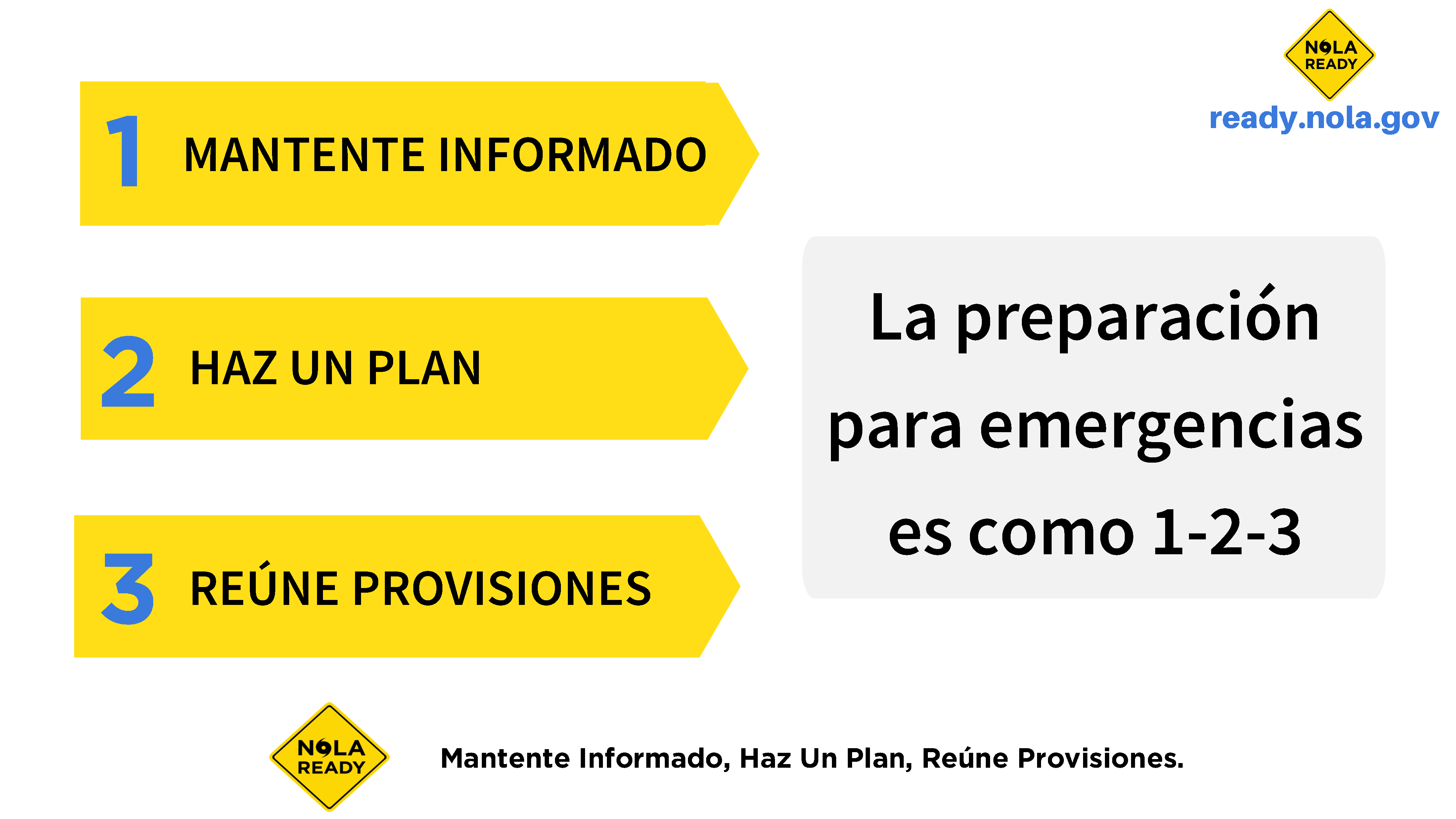
Three Important Steps
1: Build a Team
2: Make a Plan
3: Develop Resilience
Emergency Planning & Recovery Resources
Get a Plan
For Congregations
- Episcopal Relief and Development Resource Library
- Episcopal Relief and Development Gold Planning Guide
- Episcopal Relief and Development Silver Planning Guide
- Episcopal Relief and Development Bronze Planing Guide
- Province IV Disaster Relief Manual
- Episcopal Church Foundation Disaster Prep: Before, During, and After
- Church Pension Group Risk Management Library
- Active Shooter Guide for the Episcopal Diocese of Louisiana
- FEMA – Resources to Protect Your House of Worship
For Individuals and Families
- Louisiana Emergency Alert System and Evacuation Guide
- National Hurricane Center
- FEMA and www.ready.gov/hurricane
- American Red Cross
- Center for Disease Control
- LA Governor’s Office of Homeland Security
- Louisiana Emergency Preparedness Guides
- NOLA Ready Hurricane Season Preparedness
- LSU Ag Center Preparing for Disasters
- Ready.gov Preparing for Natural Disasters
- Flash.org (Federal Alliance for Safe Homes)
- Episcopal Relief and Development Individual and Family Planning Plan
- Episcopal Relief and Development “A Season of Resilience” Five Week Guide
- A Season of Resilience Social Media Graphics Zip File
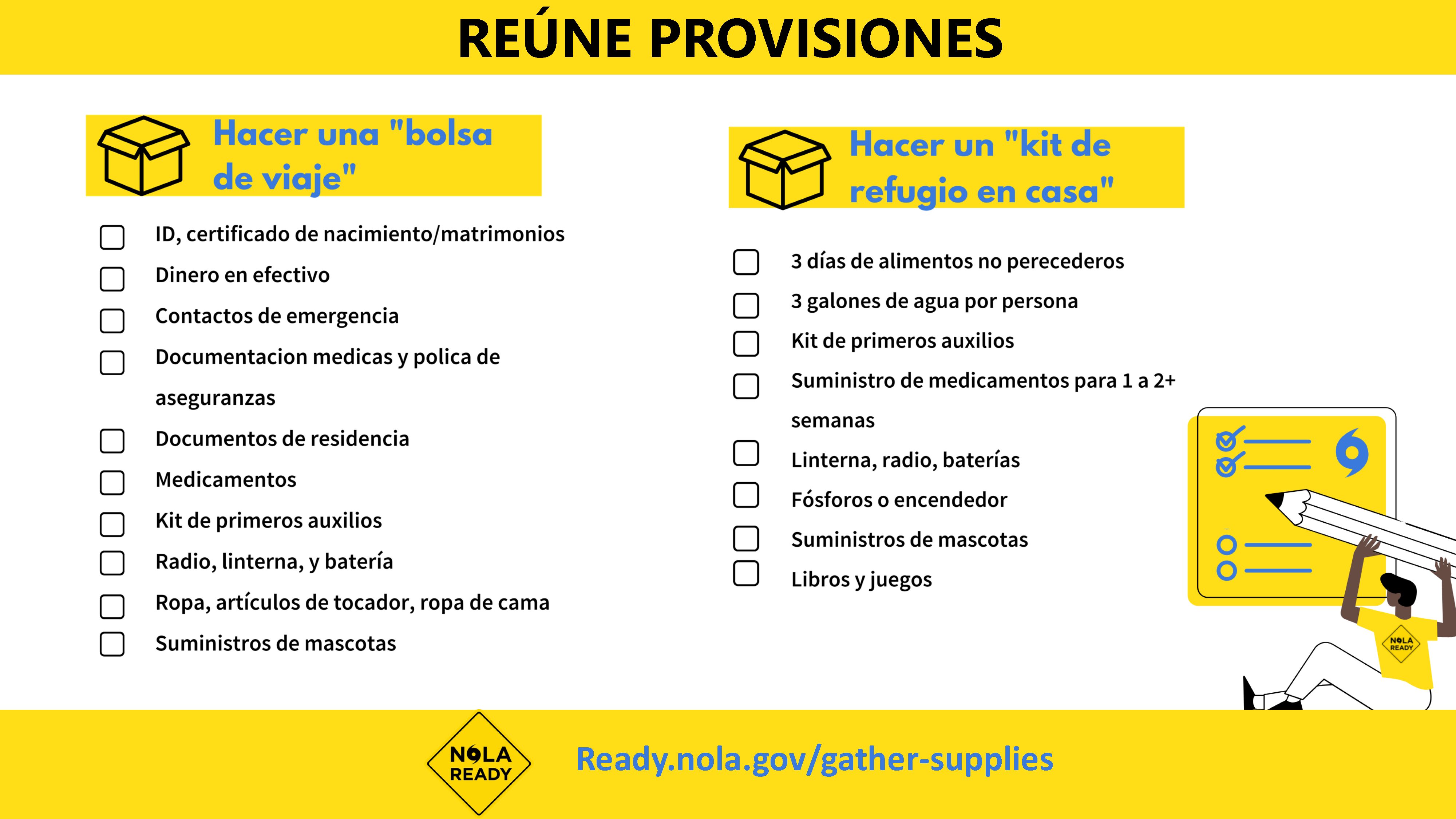
Make a Kit
What to Include
- Ready.gov Build a Kit
- Get a Game Plan Emergency Kit
- American Red Cross Emergency Kit
- NOLA Ready Build a Kit
- LSU Ag Center Emergency Kit
- LSU Ag Center: Food & Water Safety in a Disaster
- Center for Disease Control Emergency Kit
- FEMA Tip Sheet- Build a Budget Friendly Emergency Kit
- Emergency Kits for Infants and Young Children
- Emergency Kit for the Elderly
- ASPCA Emergency Kit for Pets
Be Informed
Episcopal Diocese of Louisiana Info Outlets
Weather Service Outlets
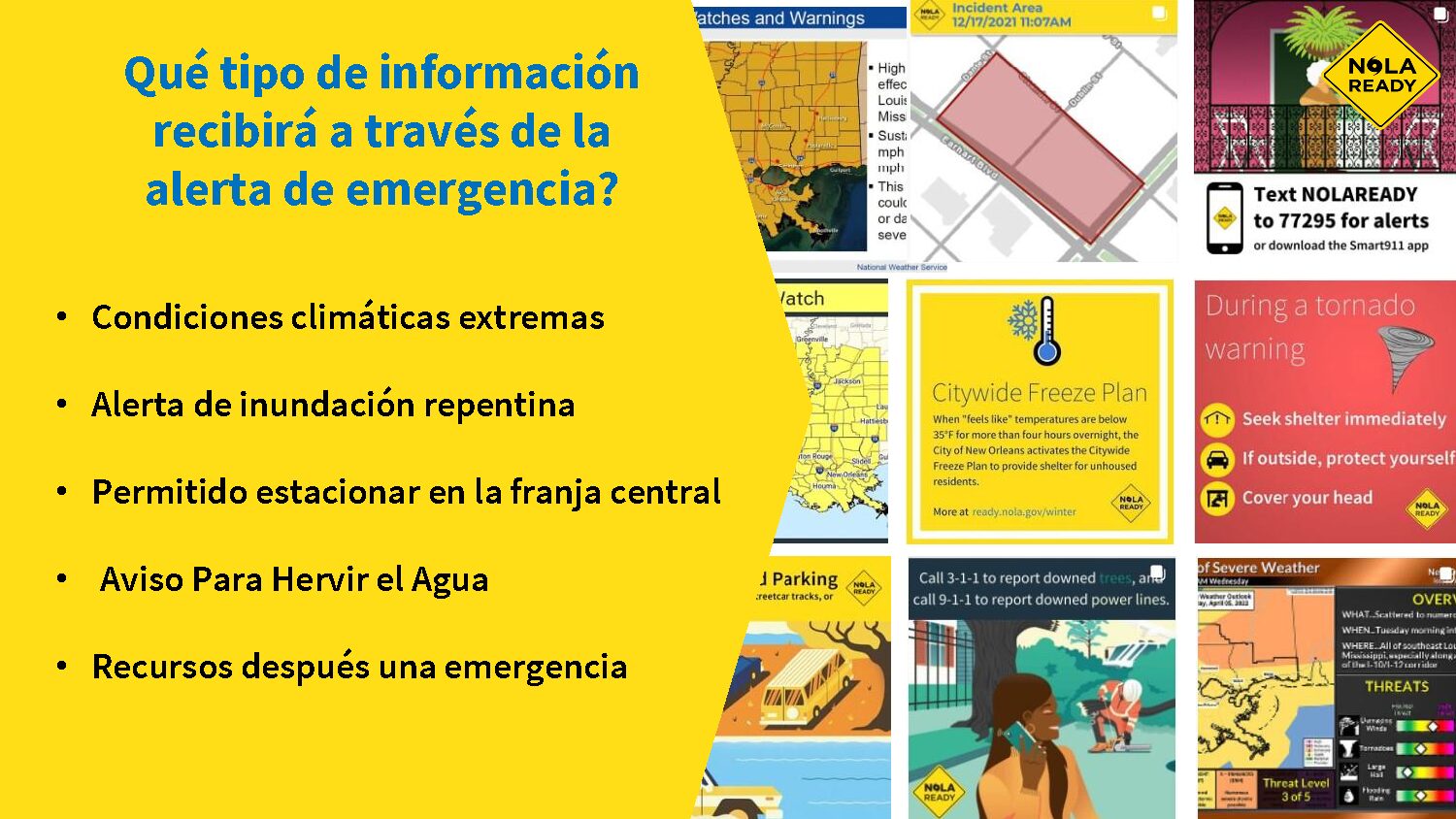
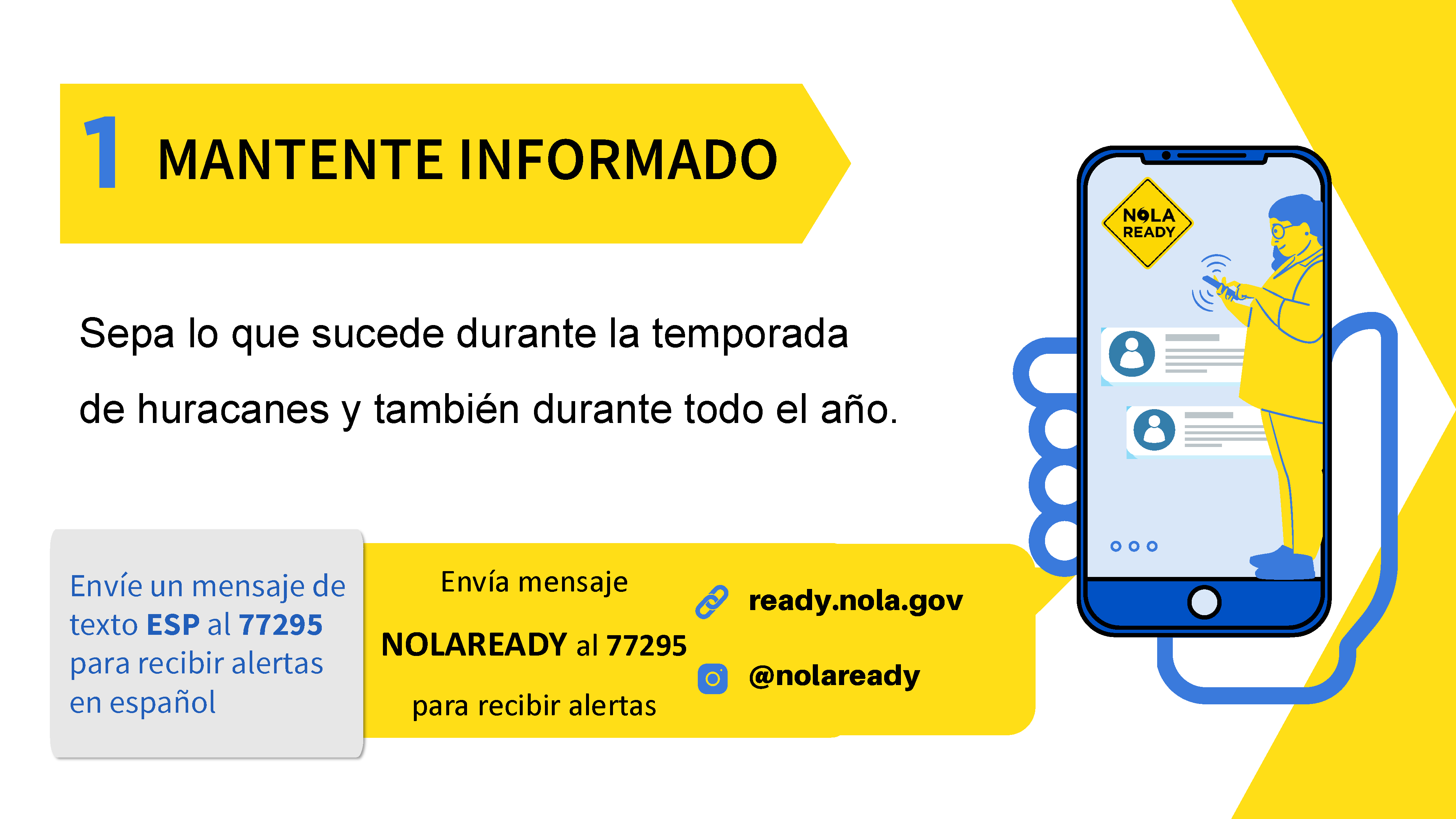
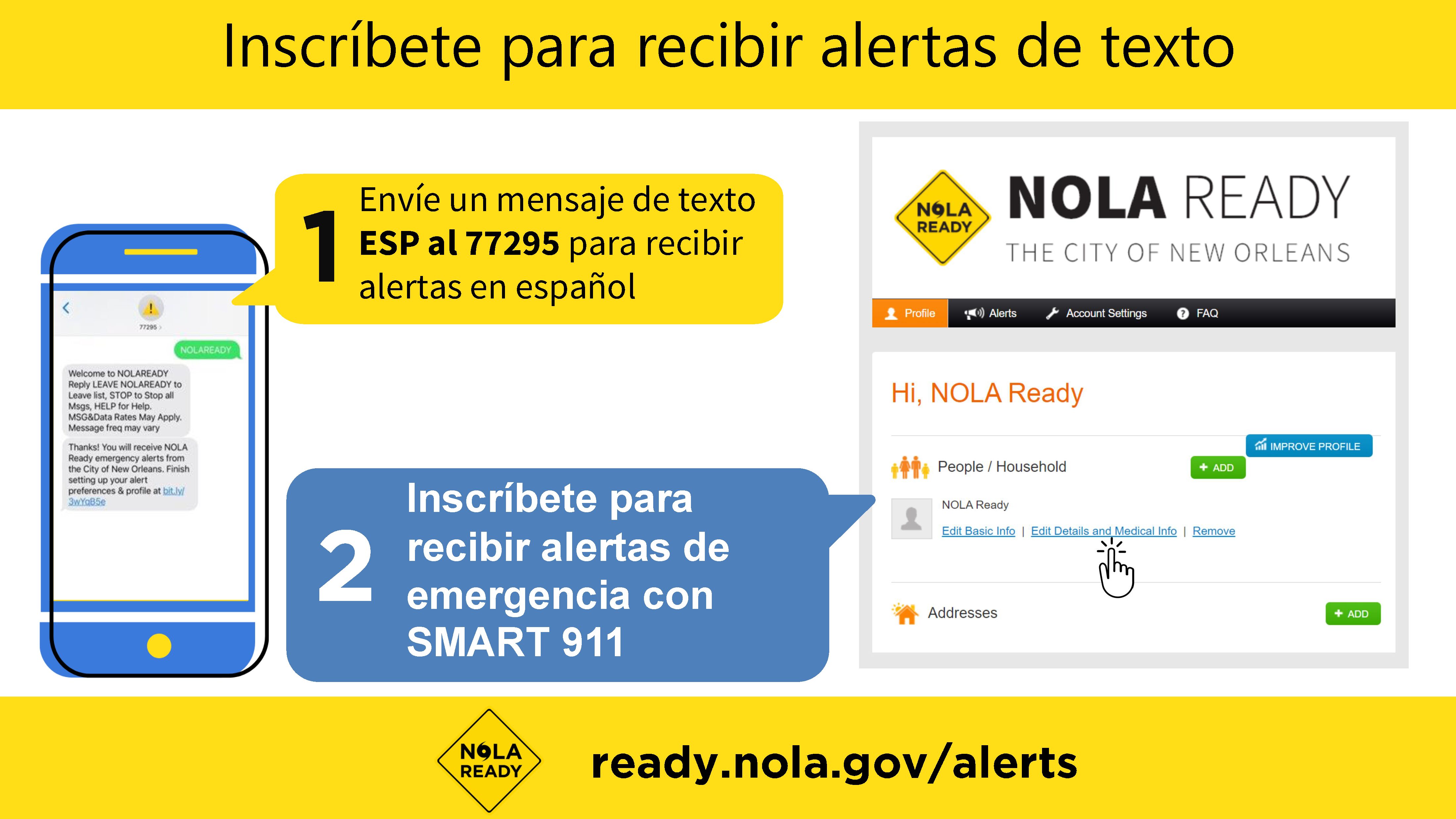
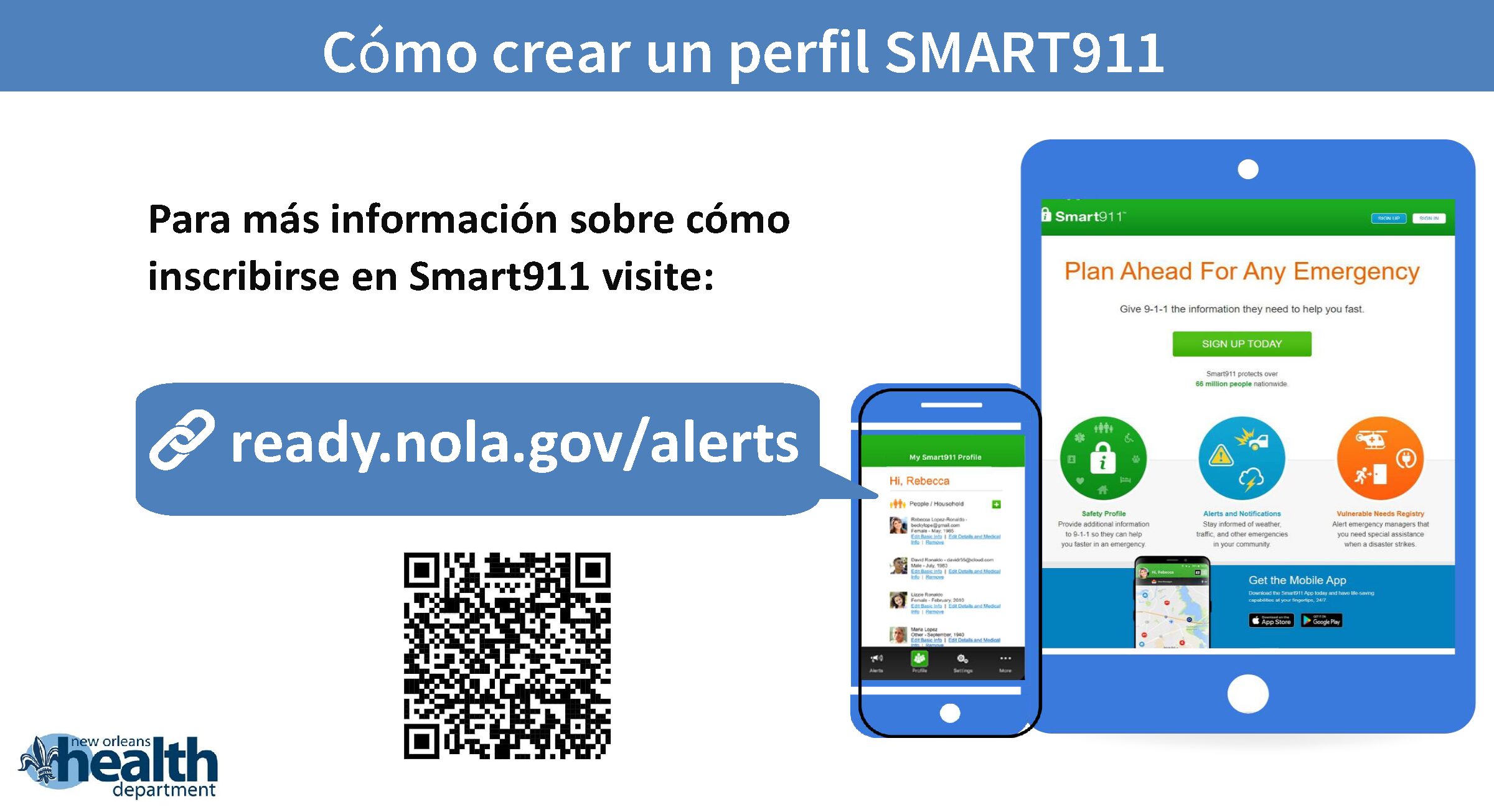
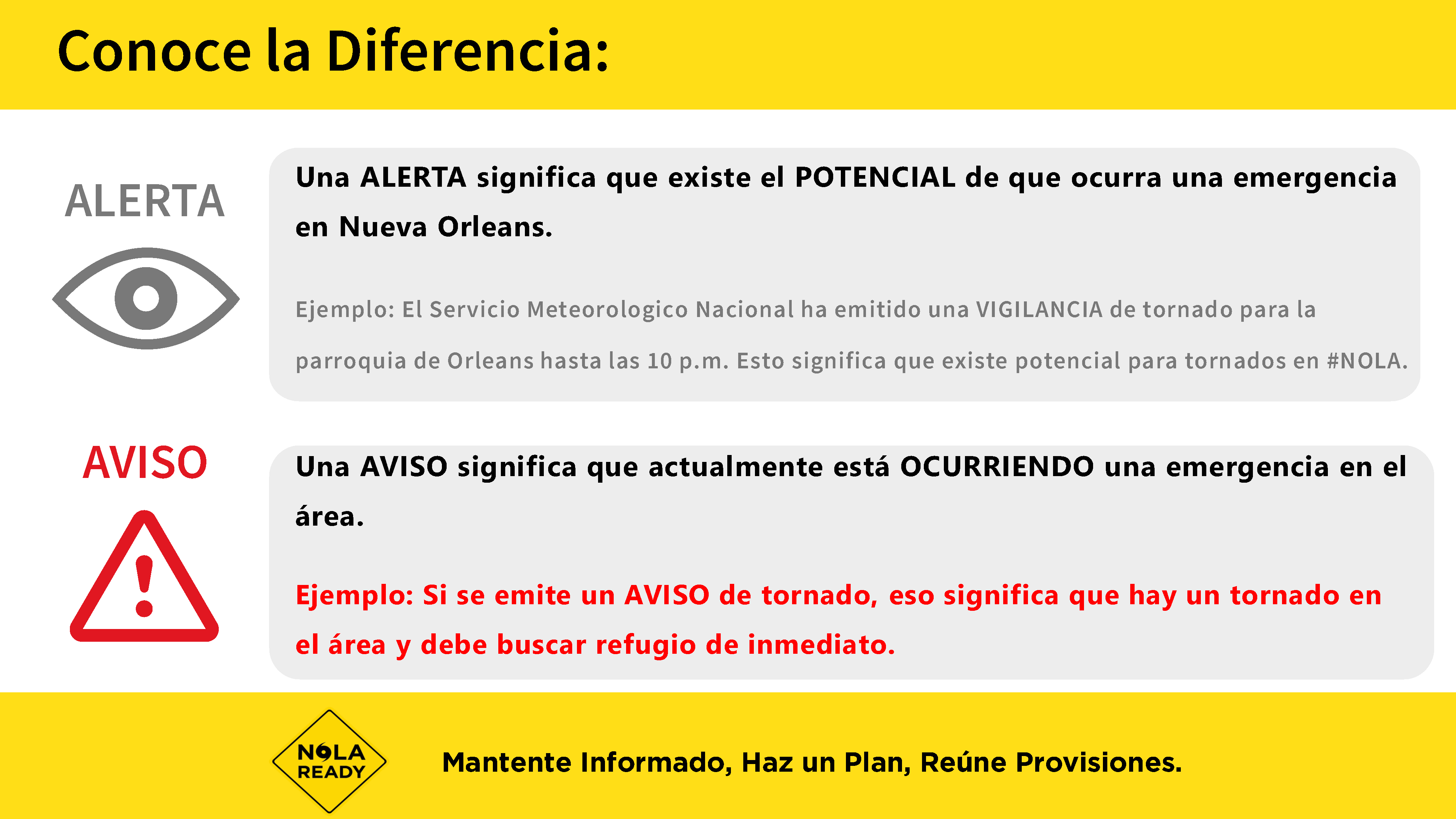
Warning Systems / Emergency Alerts
Disaster Assistance
Utlitlities Companies in Southeast Louisiana
City/Town Websites
- Amite
- Baton Rouge
- Bogalusa
- Clinton (go to East Feliciana Parish website)
- Covington
- Denham Springs
- Franklin
- Hammond
- Harvey (go to Jefferson Parish website)
- Houma (go to Terrebonne Parish website)
- Innis
- Kenner
- LaPlace (go to St. John the Baptist Parish website)
- Metairie (go to Jefferson Parish website)
- Morgan City
- Morganza
- Napoleonville
- New Orleans
- New Roads
- Paradis (go to St. Charles Parish website)
- Plaquemine
- Ponchatoula
- River Ridge (go to Jefferson Parish website)
- Rosedale (go to Iberville Parish website)
- Slidell
- St. Francisville
- Theriot (go to Terrebonne Parish website)
- Thibodaux
- Zachary
Parish Websites
- Ascension Parish
- Assumption Parish
- East Baton Rouge Parish
- East Feliciana Parish
- Iberville Parish
- Jefferson Parish
- LaFourche Parish
- Livingston Parish
- Orleans Parish
- Plaquemines Parish
- Pointe Coupee Parish
- St. Bernard Parish
- St. Charles Parish
- St. Helena Parish
- St. James Parish
- St. John the Baptist Parish
- St. Martin Parish
- St. Mary Parish
- St. Tammany Parish
- Tangipahoa Parish
- Terrebonne Parish
- Washington Parish
- West Baton Rouge Parish
- West Feliciana Parish
- List of websites for all civil parishes in Louisiana
State and National Homeland Security
- United States Department of Homeland Security
- Louisiana Governor’s Office of Homeland Security and emergency.louisiana.gov
- Homeland Security / Emergency Management Offices of the civil parishes located in the Diocese of Louisiana

ERD’s 2026 Disaster Preparedness Resources
Episcopal Relief & Development's 2026 Disaster Preparedness Webinar
This new 55-min webinar helps your congregation create an effective preparedness plan.
Key Takeaways:
- Wildfire, flooding, severe weather, heat, and displacement risks are affecting more communities nationwide
- Strong communication systems and trusted partnerships matter before disasters occur.
- Being prepared can help us help others.
- Convening leadership
- Coordinating congregational response
- Accompanying long-term recovery
- Preparedness support
- Emergency response grants
- Long-term recovery partnerships
- Technical assistance and coordination
“The most resilient communities are not necessarily those with the most resources, but those with the strongest relationships before disaster strikes.”
– Episcopal Relief & Development
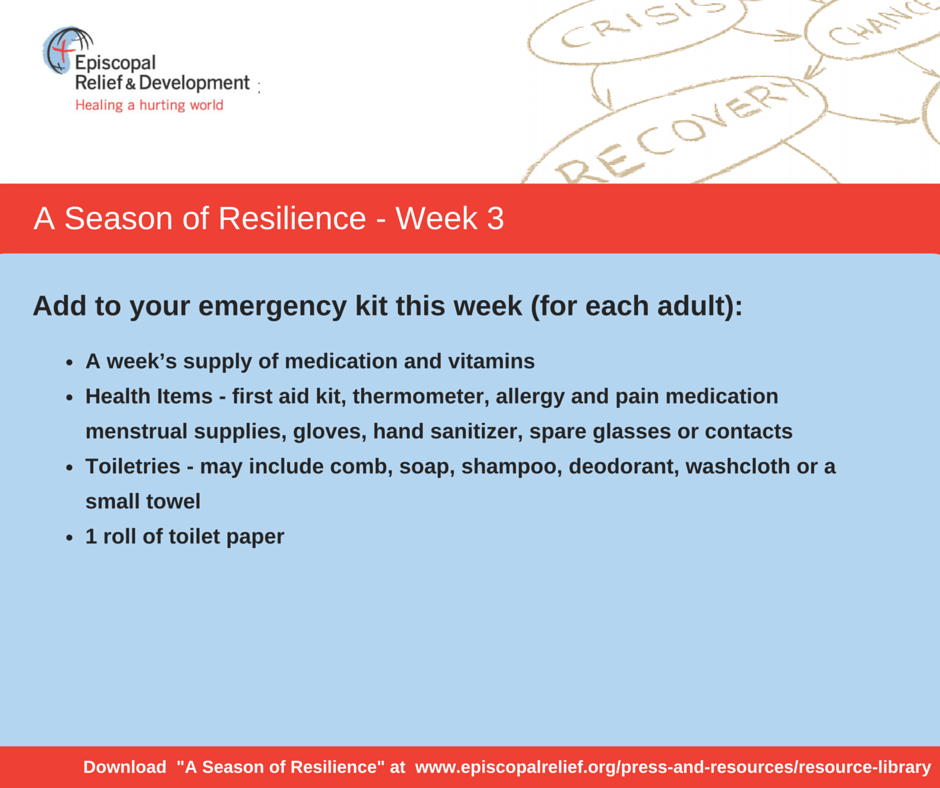
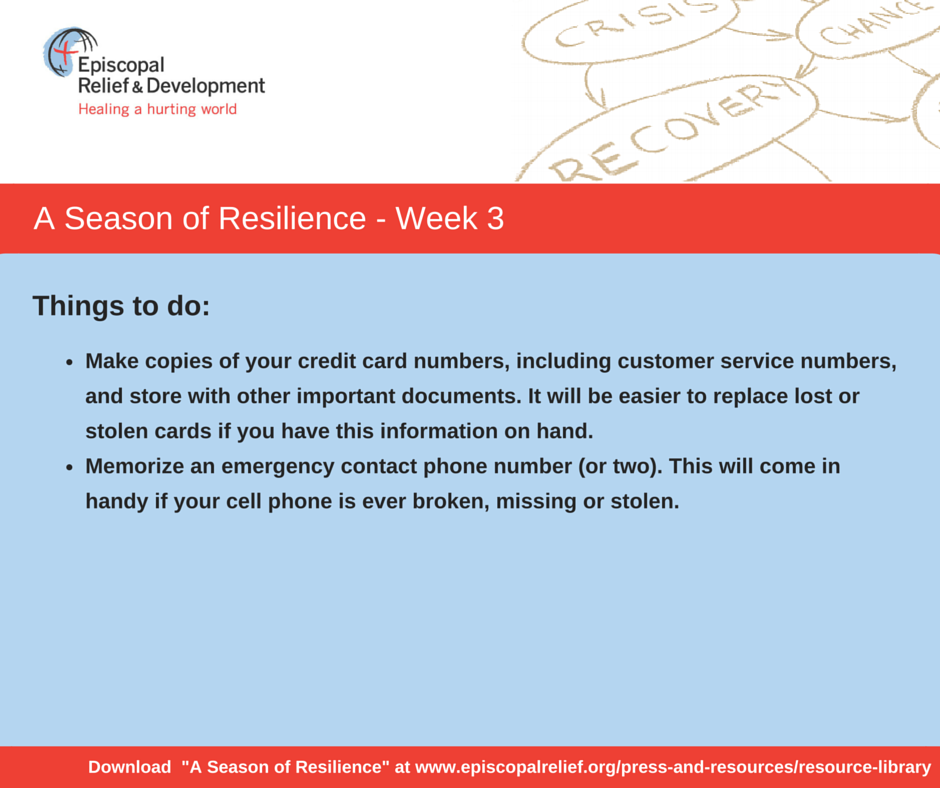
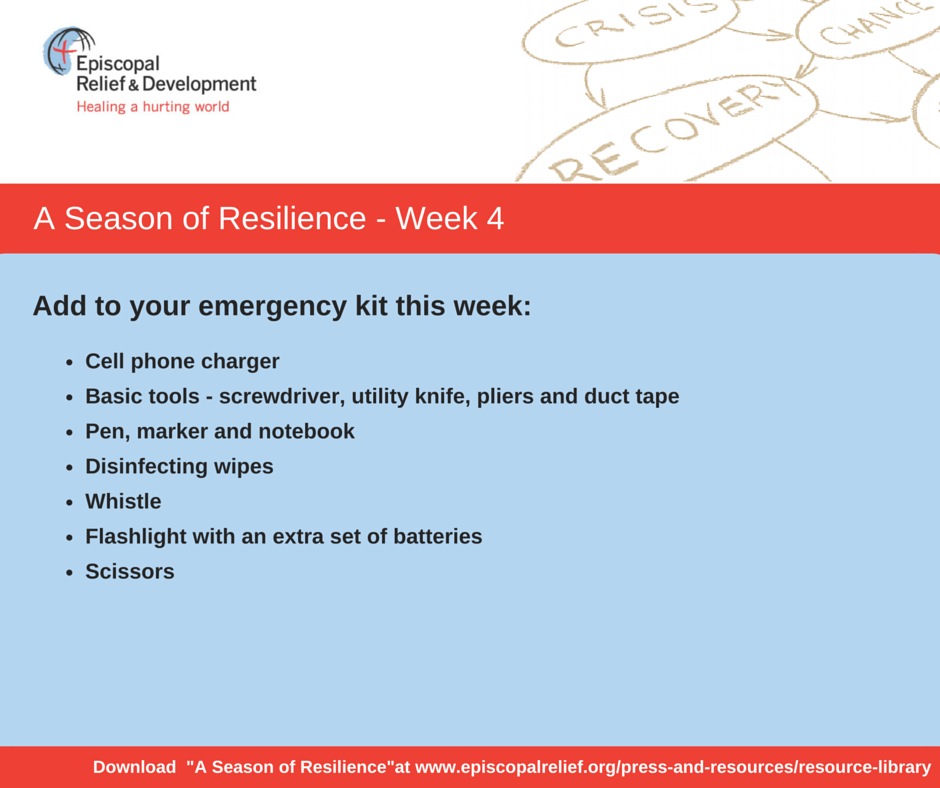
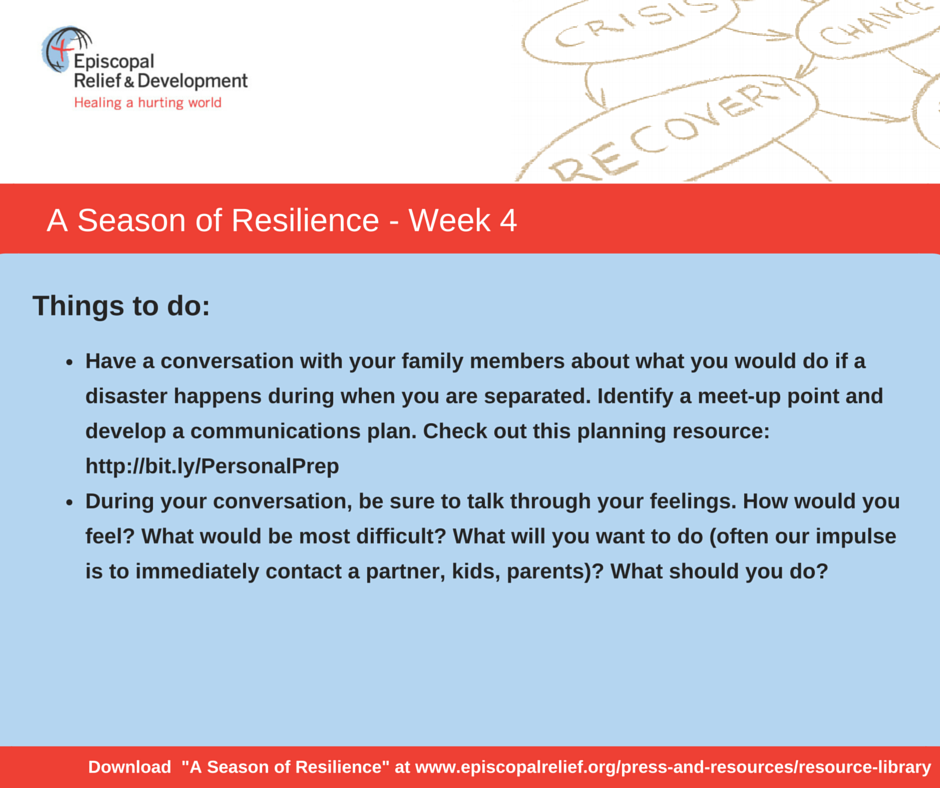
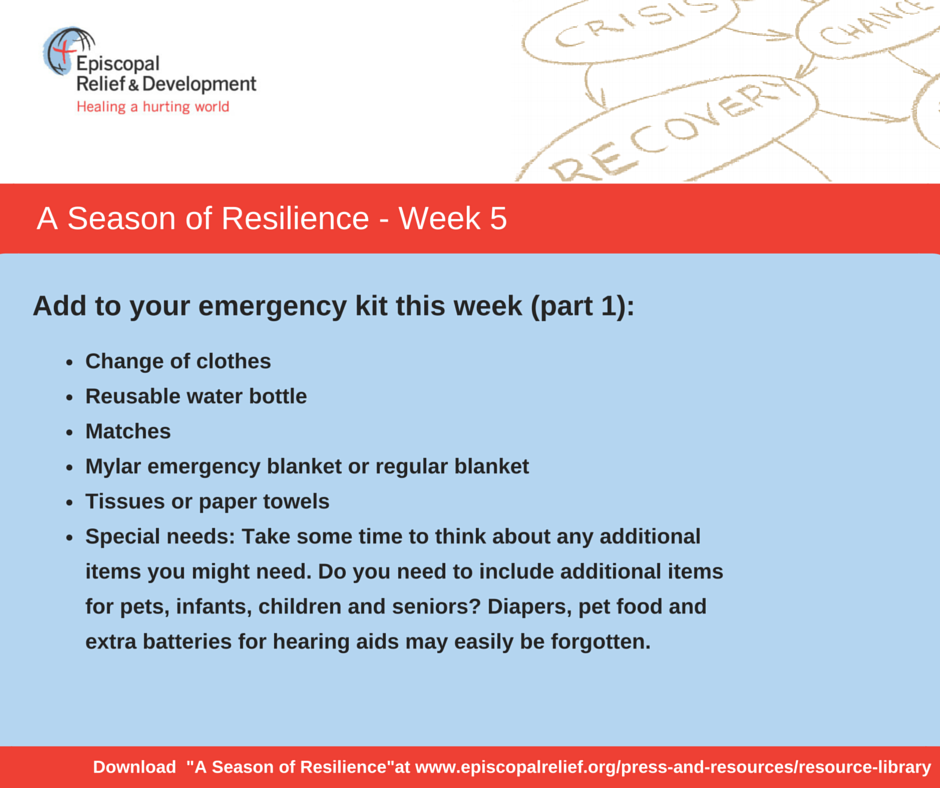
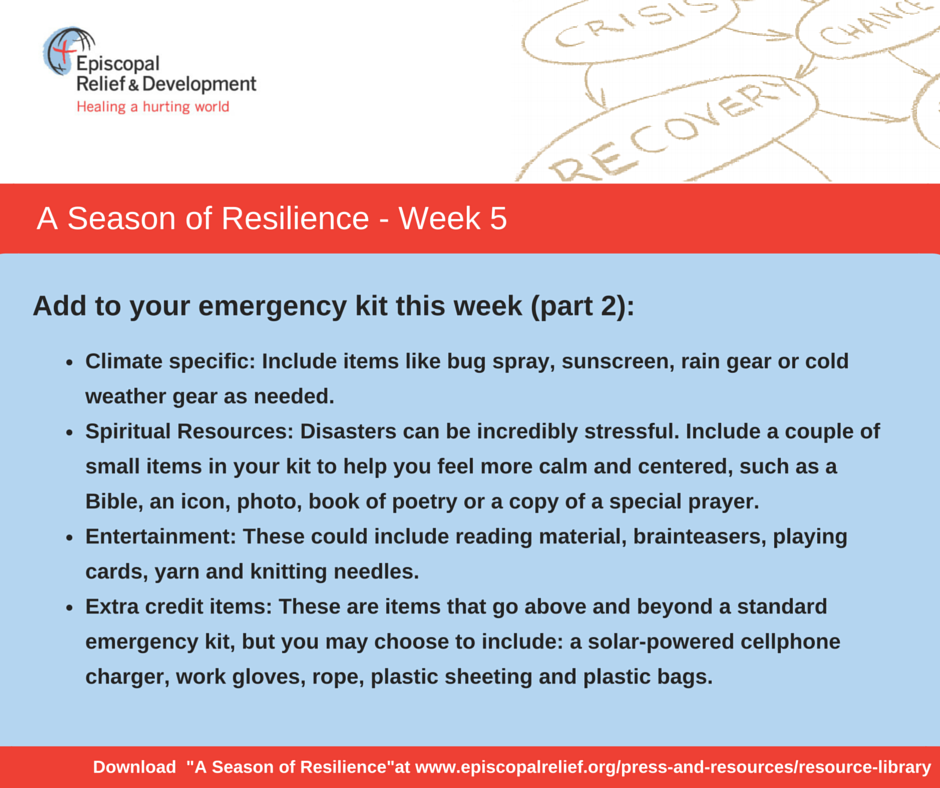
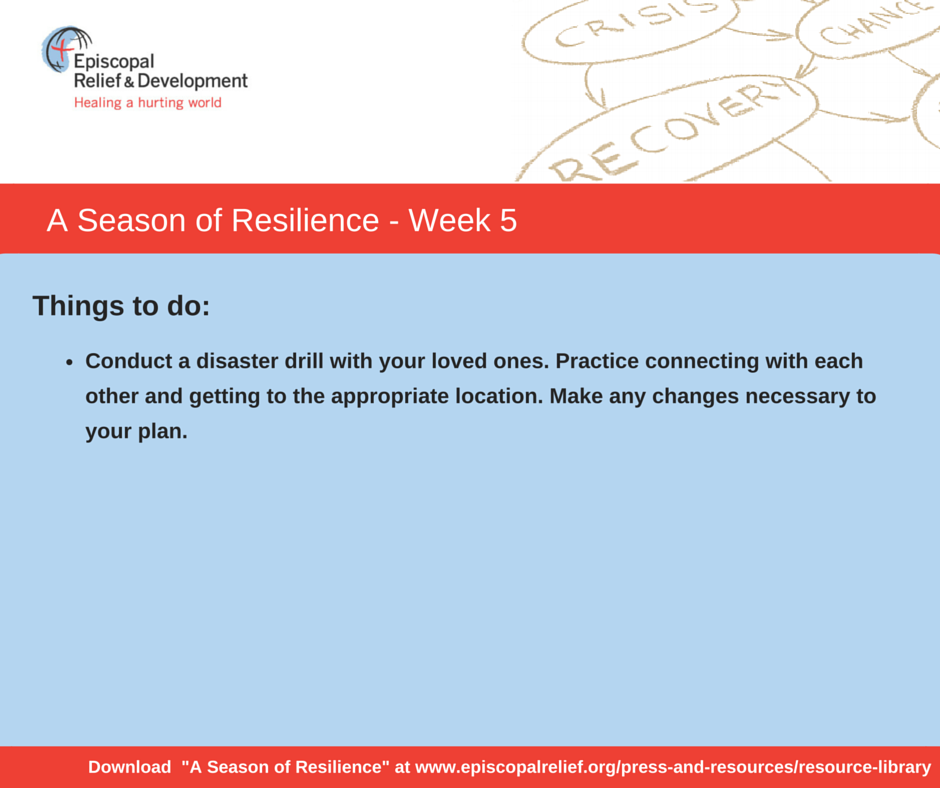
Step-by Step Family Prep Guide
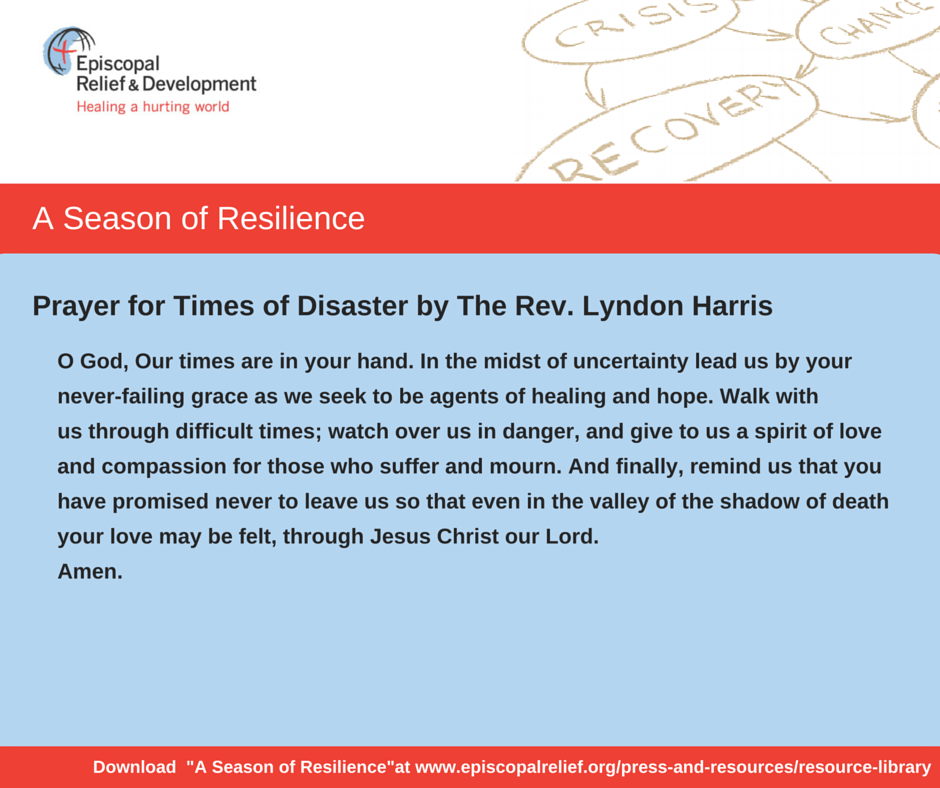
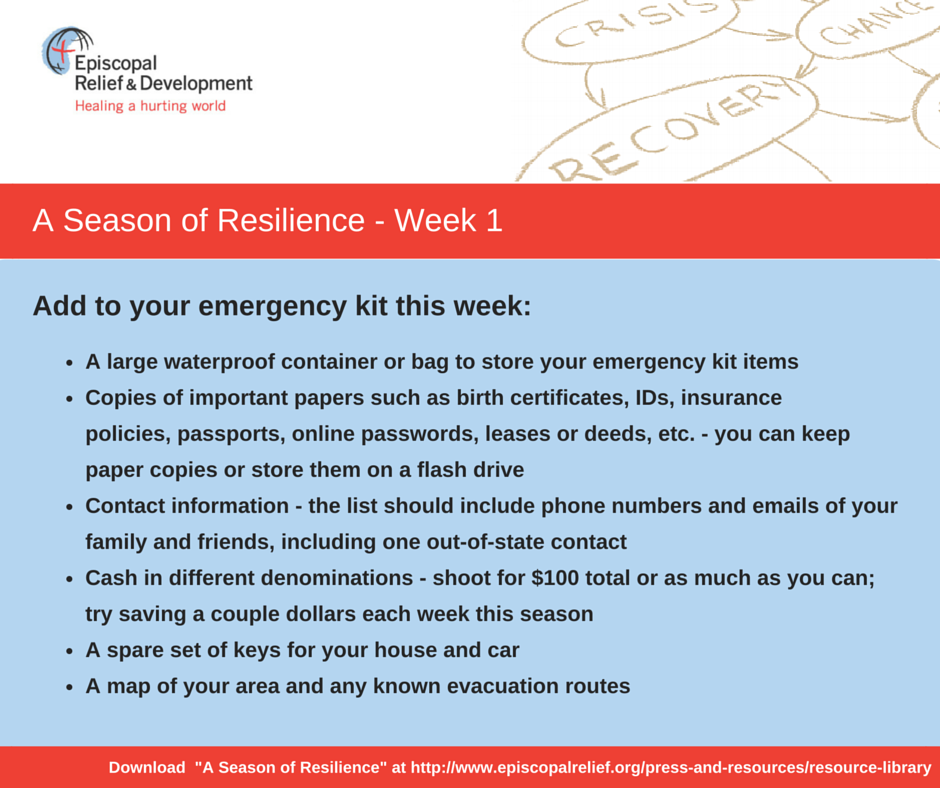
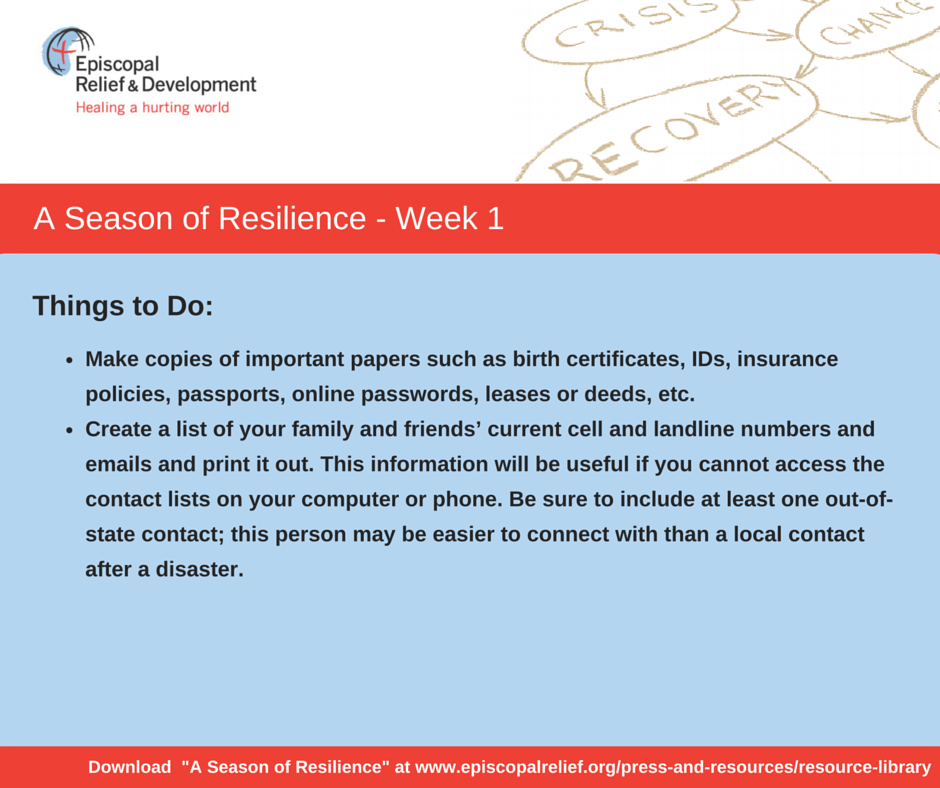
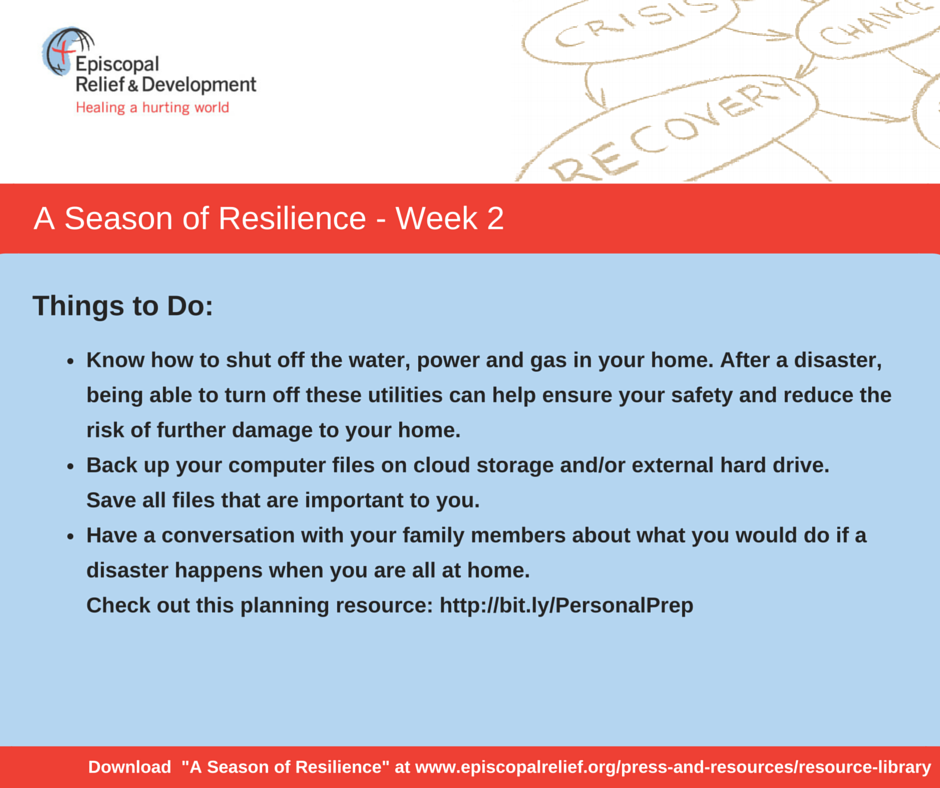
Follow ERD’s week-by-week guide to prepare an emergency kit and create a disaster plan for your family. Straight forward and doable!

More Episcopal Relief & Development Preparedness Resosurces
- Toolkit for Faith-Leaders: Restore & Renew – Responding & Rebuilding when Disaster Strikes
- Preparedness Planning Guide For Congregations (Comprehensive Level)
- Preparedness Planning Guide For Congregations (Silver Level – Intermediate)
- Preparedness Planning Guide For Congregations (Bronze Level – Basic)
- Diocesan Disaster Leadership Team
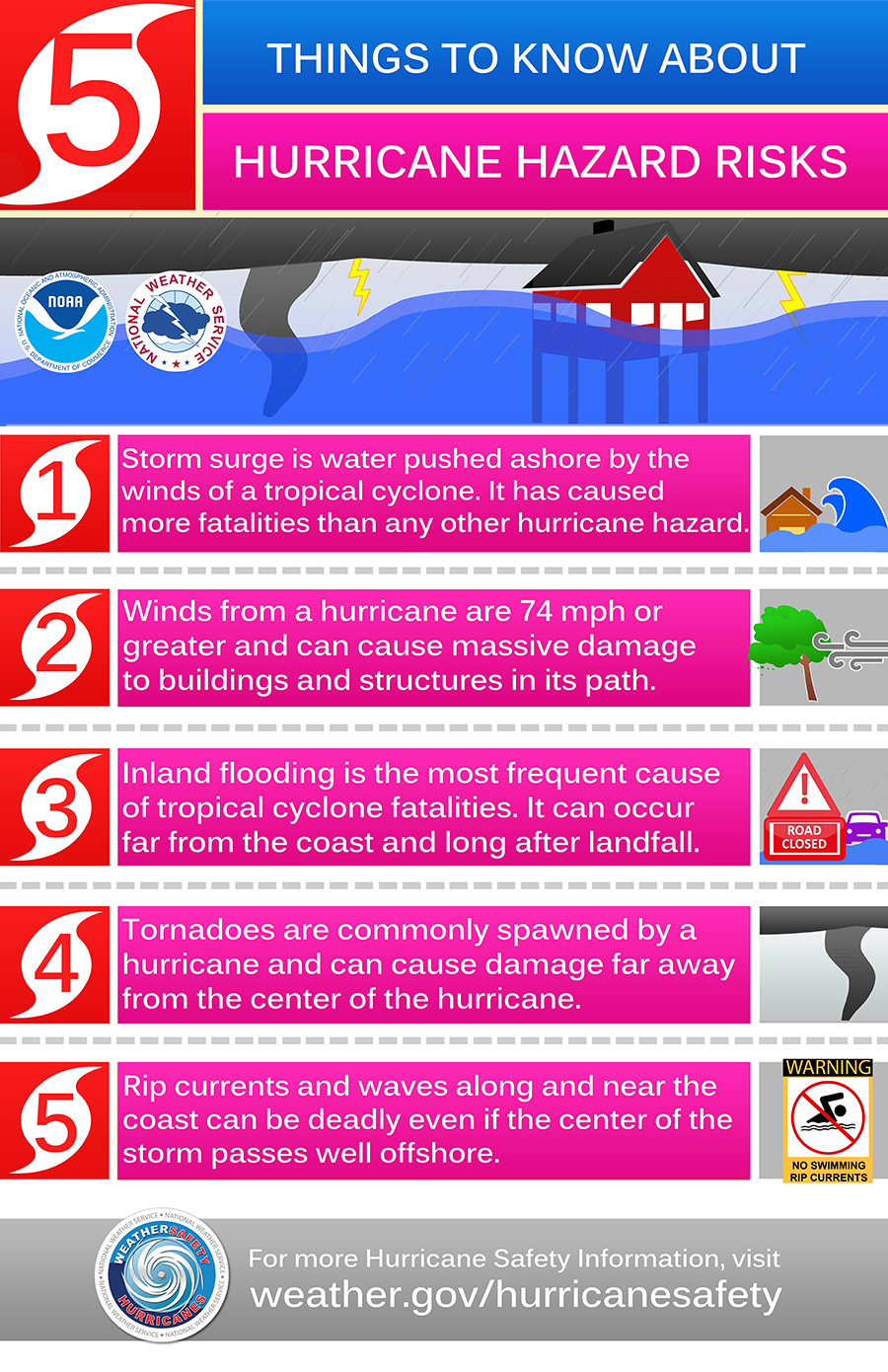
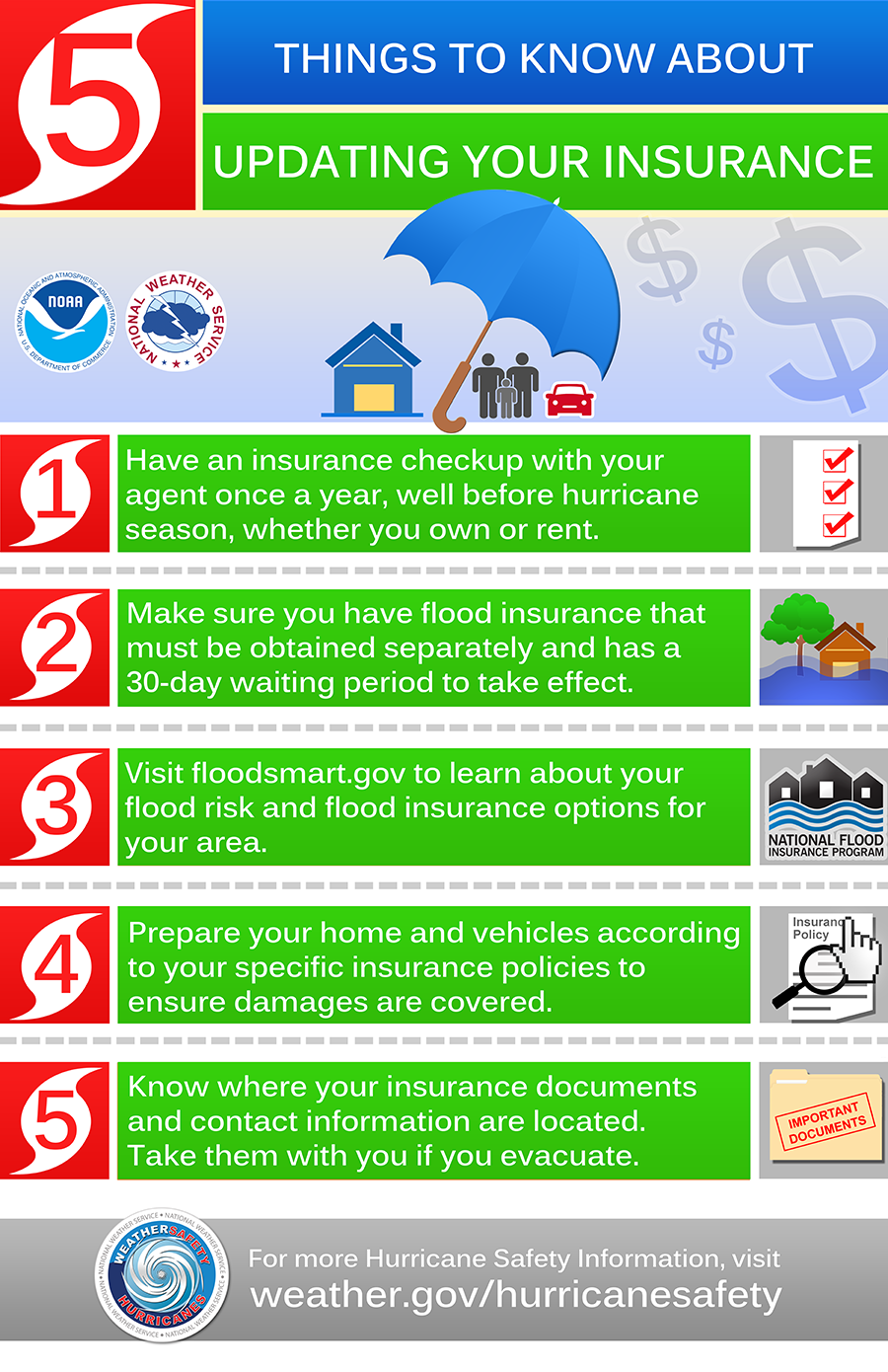
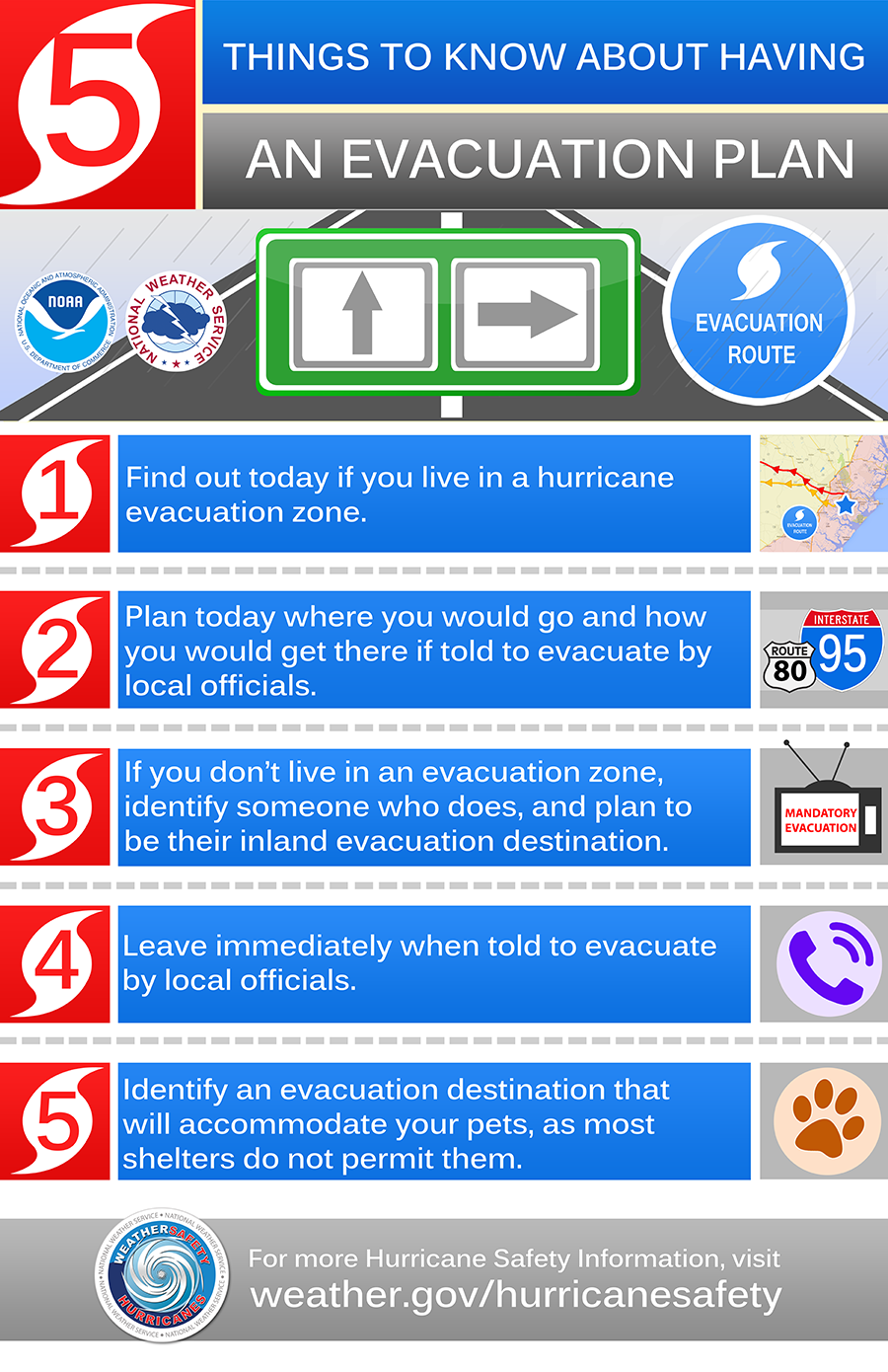
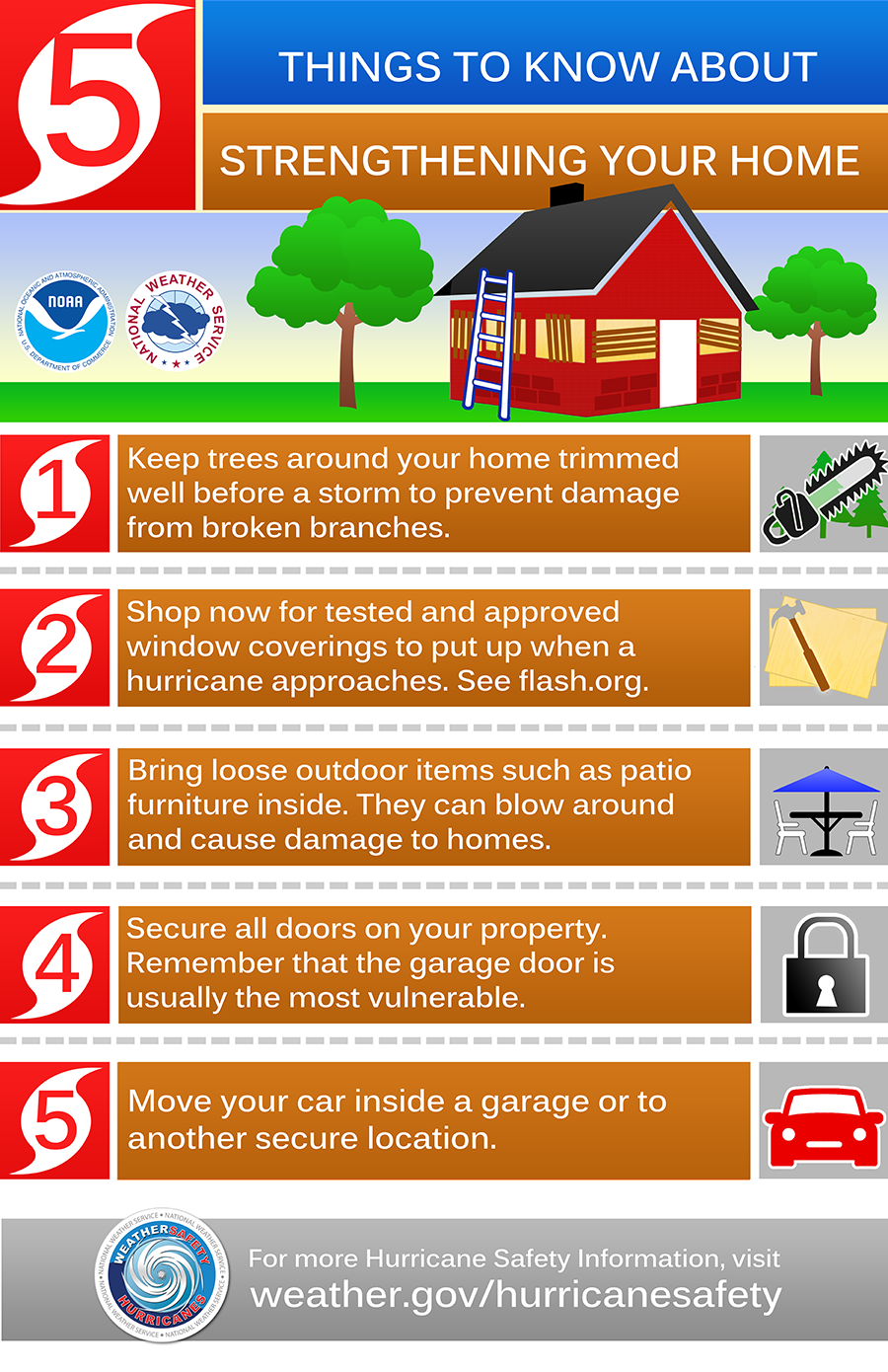
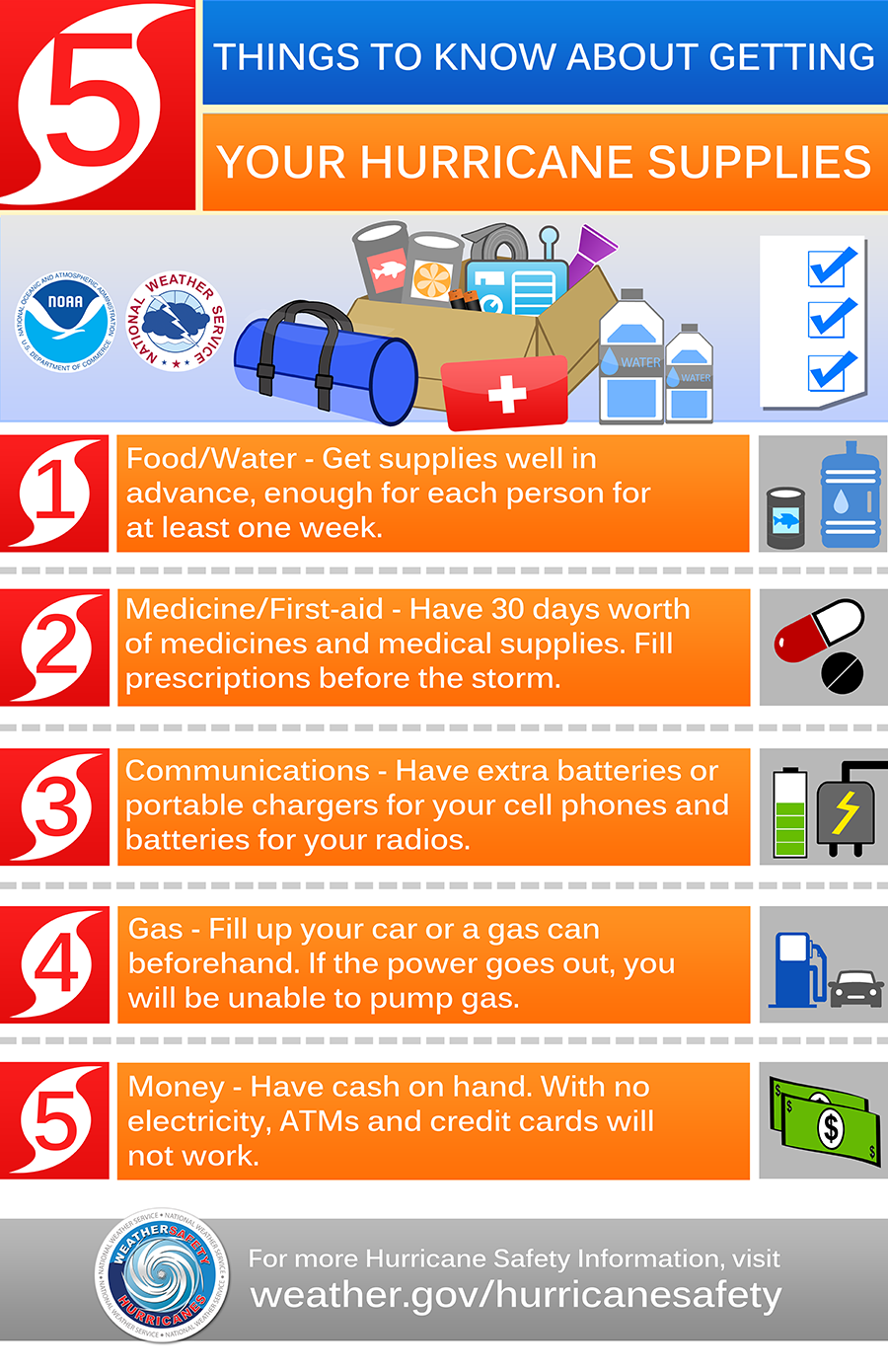
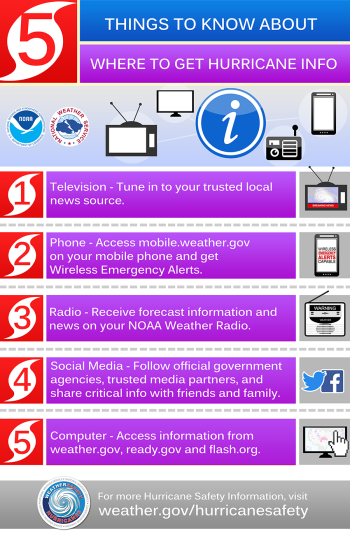
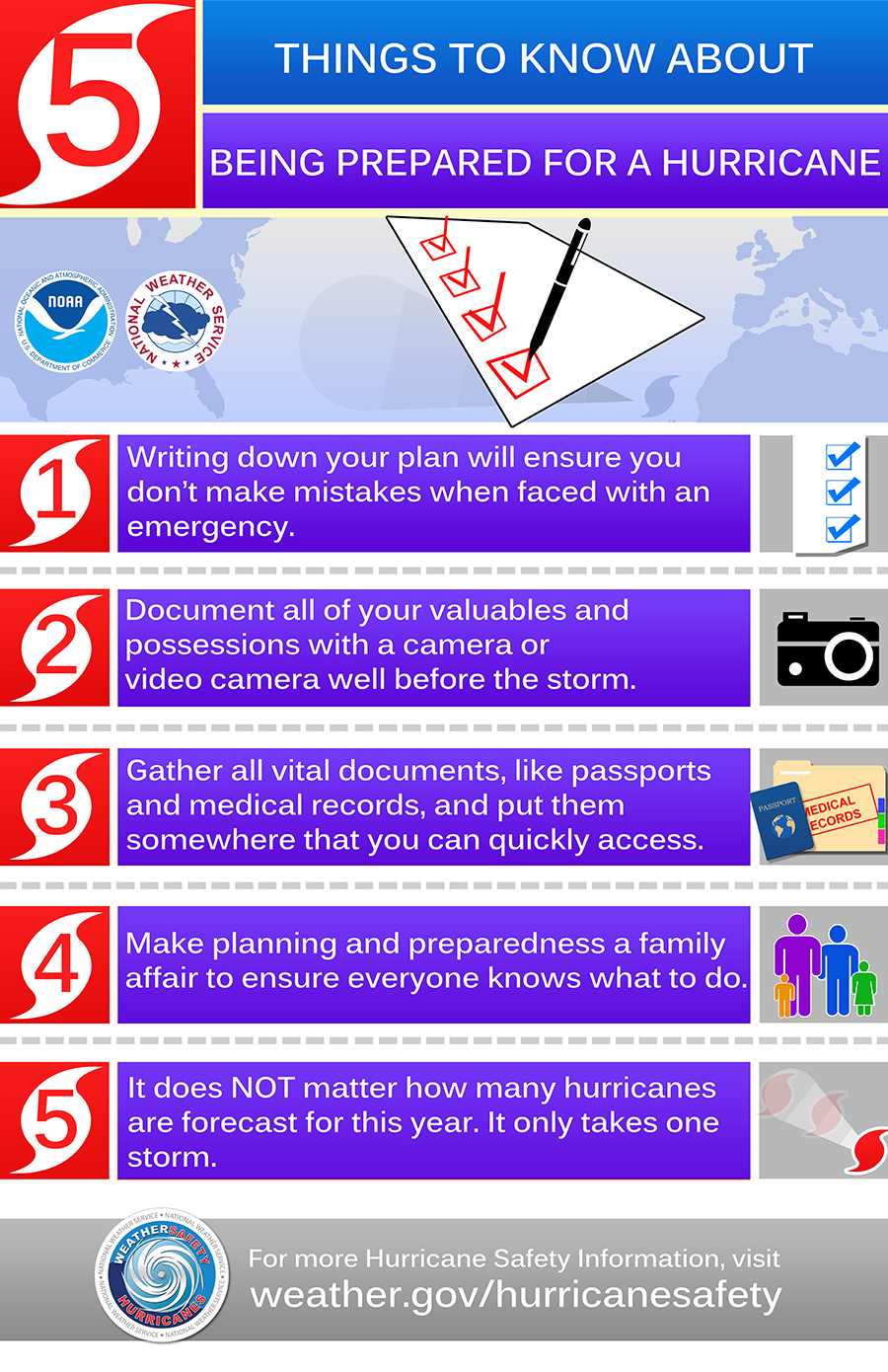
National Weather Service Quick Guides
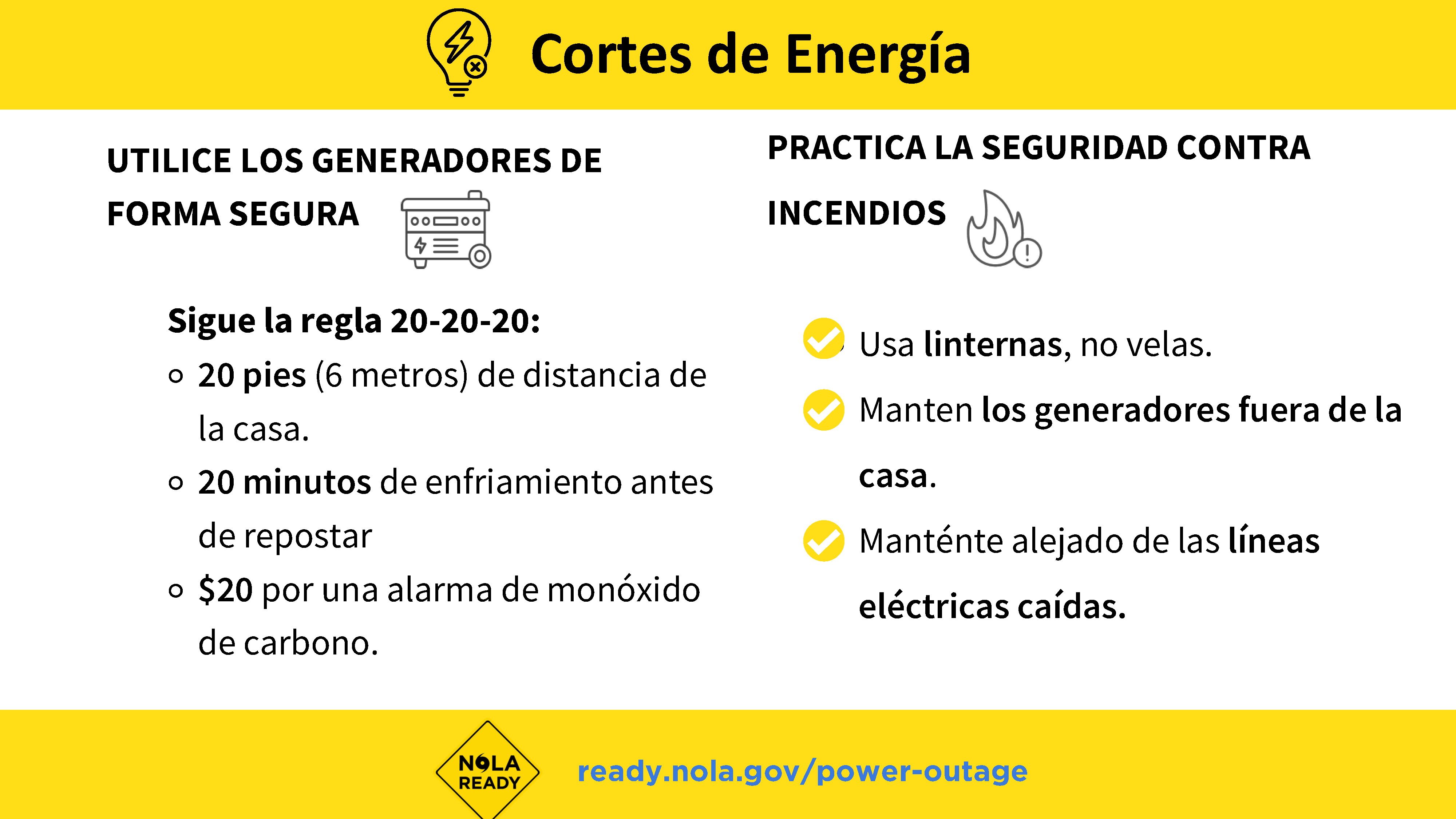
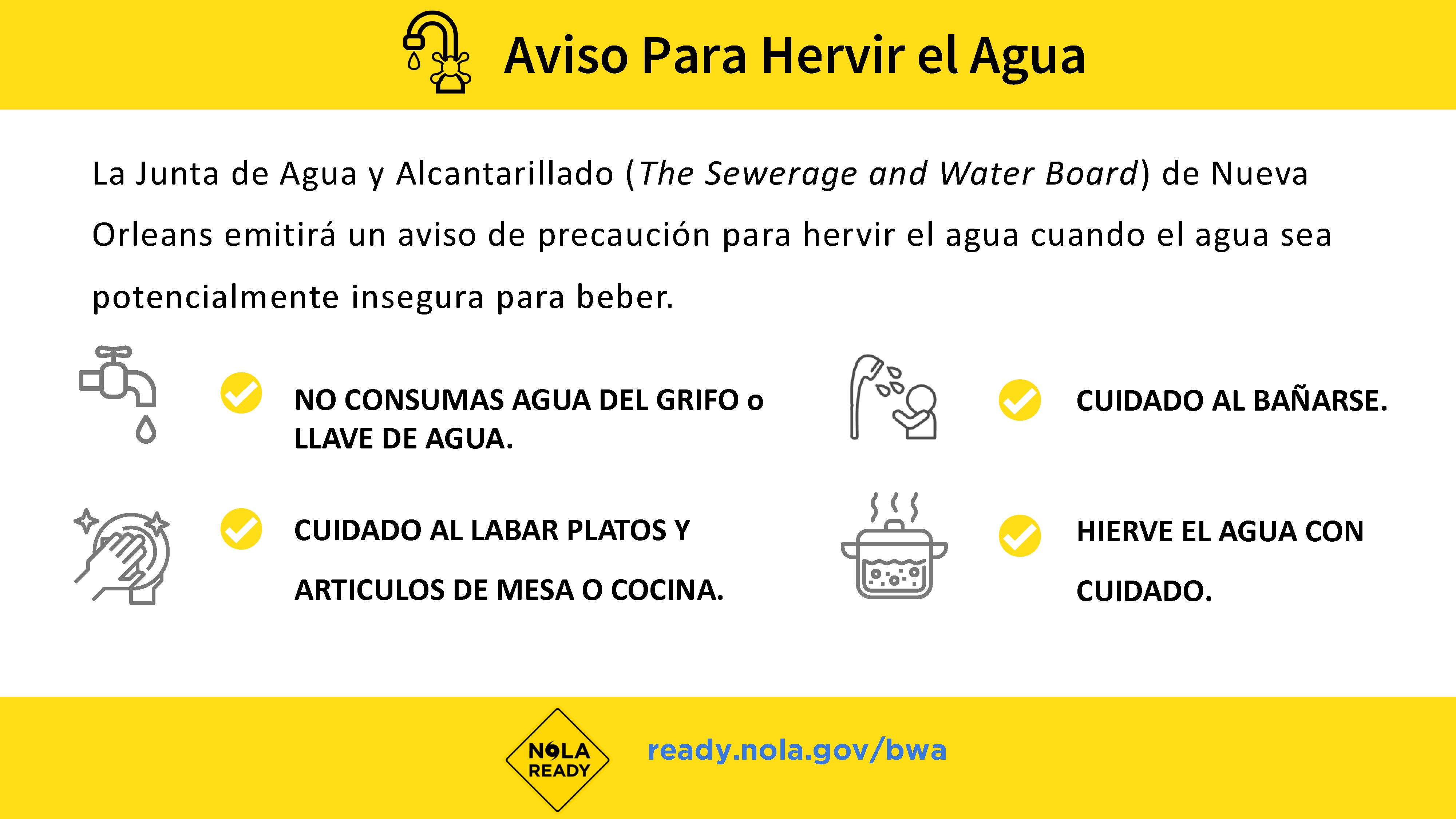
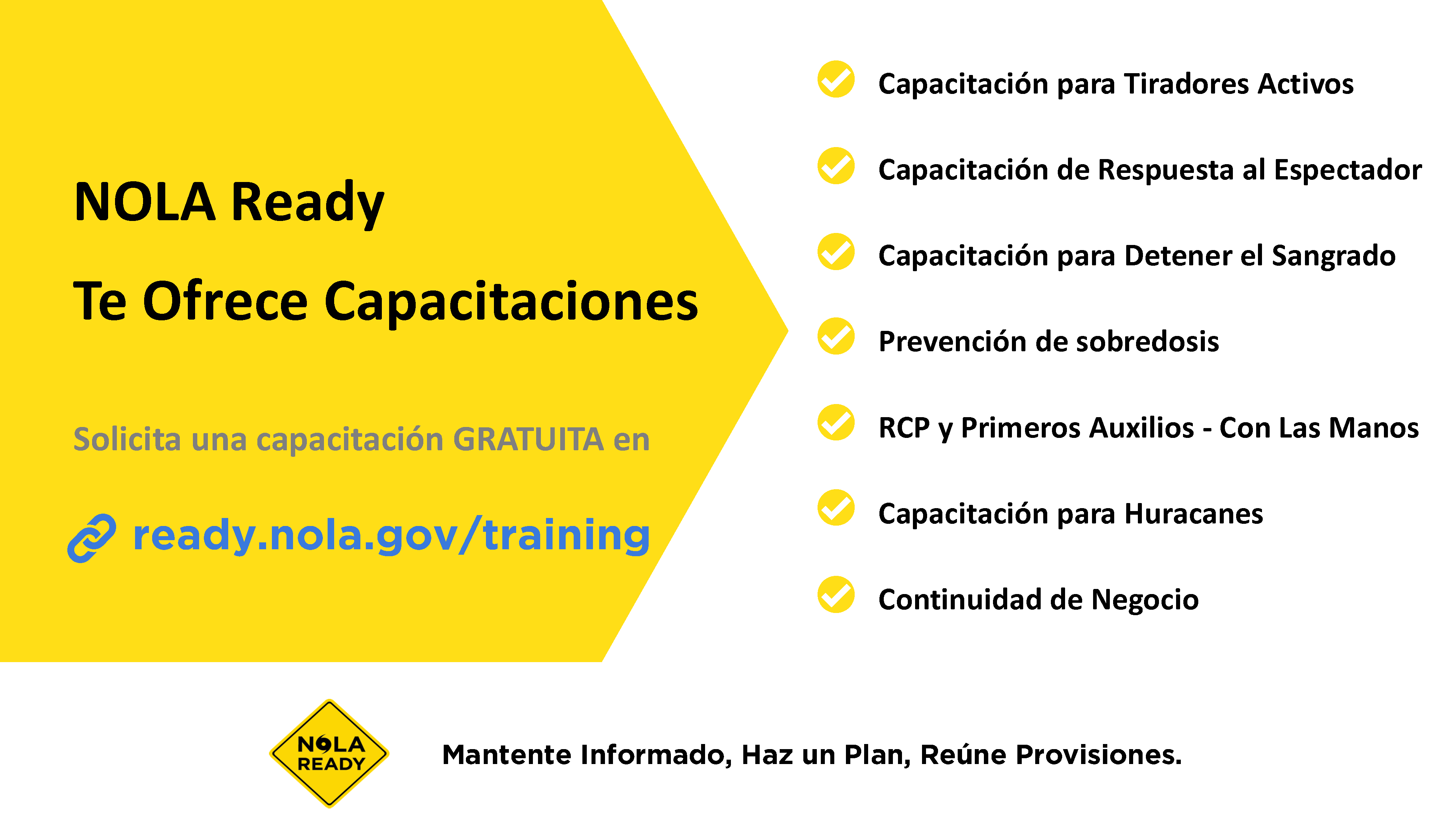
Spanish Language Resources